Learn how to prepare your trees for New Jersey summer storms and reduce the risk of storm-related tree damage.
Summer in New Jersey brings warm weather, long days, and plenty of opportunities to enjoy your property. It also brings thunderstorms, heavy rain, strong wind, and occasionally severe weather that can cause significant damage to mature trees.
A healthy tree can withstand a tremendous amount of environmental stress, but no tree is completely immune to storm damage.
Weak branches, structural defects, root problems, disease, and saturated soil can all increase the likelihood of a tree or branch failing during severe weather.
For homeowners in Morristown, Ridgewood, Livingston, and Summit, preparing trees before a storm can help reduce potential hazards and protect homes, vehicles, landscaping, and people.
Pine Valley Tree Service has been serving New Jersey homeowners since 1974. With decades of experience caring for residential trees, our team understands the importance of identifying potential hazards before they become emergencies.
Storm damage does not come from wind alone.
Several conditions can occur simultaneously during a severe summer storm.
Strong winds place pressure on the entire tree canopy.
Large branches act like sails, increasing the force placed on the trunk and root system.
Heavy rainfall can saturate the soil around a tree.
When the soil becomes saturated, the root system may have less ability to maintain stability, particularly if roots are already compromised.
Tall trees are vulnerable to lightning strikes.
A lightning strike can cause anything from localized bark damage to significant structural injury.
One of the most concerning combinations is saturated soil followed by strong winds.
When the ground becomes soft and unstable, trees with compromised root systems may be more vulnerable to uprooting.
Not every tree responds to severe weather in the same way.
Several factors can increase the risk of failure.
Dead branches have lost their structural strength and may be more likely to break during high winds.
Large dead branches over roofs, driveways, walkways, and outdoor living areas deserve particular attention.
Trees can develop weak branch unions, cracks, included bark, and other structural issues.
These defects can create weak points within the tree.
Internal decay can weaken wood even when the outside of the tree looks relatively normal.
Signs such as cavities, fungal growth, damaged bark, or extensive deadwood may warrant professional evaluation.
A tree's roots provide its foundation.
Root damage from construction, soil compaction, erosion, disease, or other factors can reduce stability.
A tree that has developed a significant or sudden lean may have an underlying structural or root problem.
A new lean after a storm should be taken seriously.
Walk around your property and inspect the trees from a safe distance.
Look for branches that appear:
Large branches located above areas where people or vehicles regularly travel deserve particular attention.
Look at major branch unions and the trunk.
Large cracks can indicate structural weakness.
Never climb a tree to inspect a potential hazard yourself.
If a tree has recently started leaning, determine whether the change is new.
A sudden change in position can indicate root movement or structural failure.
Look for unusual soil movement, exposed roots, or lifting soil.
These conditions can sometimes indicate instability.
Before severe weather arrives, move patio furniture, toys, umbrellas, and other loose items away from trees whenever possible.
This can reduce the number of objects that could become airborne during high winds.
Branches that extend over roofs, garages, sheds, pools, and other structures should be monitored carefully.
This does not automatically mean they need to be removed.
A professional evaluation can determine whether pruning is appropriate.
If you have concerns about a mature tree, do not wait until the forecast calls for severe weather.
Professional tree care can identify structural problems and address certain hazards before storms arrive.
Proper pruning can help improve the structure of a tree and remove branches that are already dead, damaged, or poorly positioned.
However, pruning is not a guarantee against storm damage.
Severe weather can damage even healthy trees.
The goal of preventative pruning is to address known weaknesses and maintain a strong structure.
The appropriate pruning schedule depends on the species, age, health, and condition of the tree.
Some trees are best pruned during dormant periods, while other situations may require pruning during the growing season.
Rather than following a one-size-fits-all schedule, homeowners should have trees evaluated based on their specific needs.
Most trees do not need to be removed simply because a storm is approaching.
However, if a tree is already severely compromised, waiting for the next storm may increase the risk to your property.
Potential warning signs include:
A professional tree evaluation can help determine whether a tree can safely remain on the property.
If a tree falls during severe weather, safety should come first.
Never approach a tree or branch that has fallen onto or near electrical lines.
Downed lines can remain energized even when they appear inactive.
Contact the appropriate utility provider and emergency personnel when necessary.
Large fallen trees can remain under significant tension.
Branches and trunks can shift unexpectedly during cleanup.
Do not attempt to cut or move a large storm-damaged tree yourself.
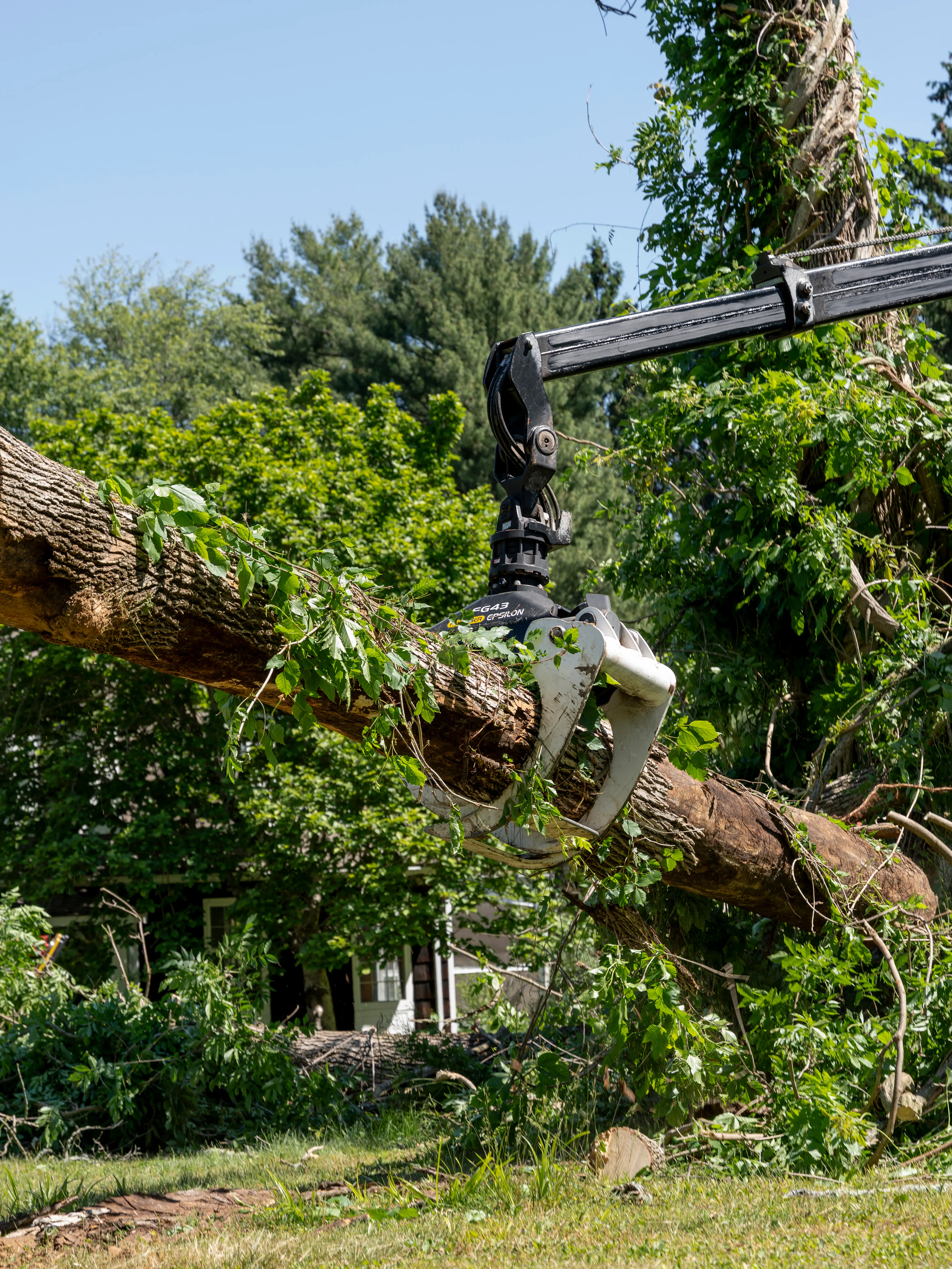
Professional emergency tree removal can help address dangerous trees and branches following severe weather.
A tree that has fallen or partially failed may still contain tremendous amounts of stored energy.
Bent branches can spring back.
Partially attached limbs can fall without warning.
A damaged trunk can shift unexpectedly.
This is one of the biggest reasons homeowners should avoid using a chainsaw on large storm-damaged trees unless they have the appropriate professional training and equipment.
A tree does not have to fall completely to be dangerous.
After a severe storm, look for:
Even if the tree is still standing, damage may have changed its structural stability.
A professional evaluation can help determine what should happen next.
New Jersey homeowners can take several preventative steps throughout the summer.
Regular pruning and tree care can address deadwood and certain structural issues.
Pay attention to changes in appearance, structure, and stability.
Do not wait until a large branch is hanging over your home to address a known concern.
Make sure driveways and access areas remain usable for emergency services and tree crews.
Having a professional tree service available before an emergency happens can make storm response much easier.
You should consider a professional tree evaluation if:
Homeowners in Cranford, Berkeley Heights, and Plainfield with mature residential trees can benefit from preventative evaluations before severe summer weather arrives.
One of the biggest misconceptions about storm damage is that a tree must be visibly broken to have been affected.
Wind can create structural stress without immediately causing a complete failure.
Heavy rain can alter soil conditions.
A branch can crack without falling.
Roots can shift without the tree immediately uprooting.
That is why inspecting trees after significant storms is an important part of responsible property maintenance.
You cannot control the weather, but you can control how prepared your property is.
Identifying weak branches, addressing structural problems, maintaining healthy trees, and monitoring mature trees can all help reduce potential storm-related hazards.
Pine Valley Tree Service has decades of experience helping New Jersey homeowners maintain and protect their trees. From preventative tree pruning to emergency tree removal, our team can help homeowners determine the right approach for their property.
Yes. Even healthy trees can fail during extreme weather. However, structural defects, root problems, disease, decay, and poor growing conditions can increase the likelihood of failure.
Heavy rain can saturate the soil around trees. When combined with strong winds, saturated soil may reduce stability, particularly for trees with existing root problems.
Look for significant deadwood, cracks, decay, sudden leaning, root damage, weak branch unions, and other structural abnormalities. A professional inspection is the safest way to evaluate a potentially hazardous tree.
Not necessarily. Most trees do not need to be removed simply because severe weather is possible. A professional evaluation can determine whether a specific tree presents an unacceptable hazard.
Proper pruning can reduce certain hazards by removing dead, damaged, or structurally problematic branches. However, no pruning program can completely prevent storm damage.
Keep everyone away from the affected area and do not attempt to cut the tree yourself. If power lines are involved, stay away and contact the appropriate utility or emergency services. A professional tree service can evaluate the tree and determine how it can be safely removed.
Not necessarily. Some trees naturally grow with a lean. However, a sudden or worsening lean can indicate root or structural problems and should be evaluated.
Saturated soil can reduce the stability of the root system. When strong winds place additional force on the canopy, a compromised tree may be more vulnerable to uprooting.
Large hanging branches can be dangerous because they may fall unexpectedly. Homeowners should avoid climbing or cutting storm-damaged branches and should have significant hazards handled professionally.
Yes. Lightning can cause severe injury or death to a tree, although some trees survive lightning strikes. Damage can range from bark injury to internal structural damage.
Dangerous storm damage should be addressed as soon as reasonably possible. Trees blocking access, threatening structures, or involving utility lines should be treated as higher-priority hazards.
Some trees can recover from limited storm damage, particularly when the trunk and root system remain healthy. Proper pruning and monitoring may help preserve the tree.
After significant storms, especially those involving strong winds or heavy rainfall, homeowners should visually inspect their property from a safe distance. If you notice significant damage, leaning, hanging branches, or exposed roots, consider having the tree professionally evaluated.
.webp)
Healthy trees provide shade, beauty, privacy, and value, but problems can develop long before a tree appears obviously damaged. Learn 10 important signs of a healthy tree, the warning signs homeowners should watch for, and when professional tree care can help protect mature trees throughout New Jersey.
Common tree pests can weaken otherwise healthy trees and cause long-term damage when infestations go untreated. Learn how to recognize signs of insects, which pests commonly affect New Jersey trees, when treatment may be necessary, and how homeowners can protect their landscapes with professional tree care.
.webp)
Healthy roots are the foundation of a healthy and stable tree. Learn how soil compaction, construction, drainage problems, erosion, and other issues can damage tree roots, what warning signs homeowners should look for, and how professional tree care can help protect mature trees throughout New Jersey.

Stay connected with seasonal tips, expert advice, and updates from the team!
By Subscribing. your agree to our terms and receive exclusive tree care updates.